

Driving Tips to Extend Mileage
#1
 09-03-2006, 07:51 PM


 Driving Tips to Extend Mileage
I'm not getting the rated mileage out of my 450H. I accelerate mildly, and don't really use the power the car offers. I drive mostly stop and go in the city. So, I am looking for the secret on how to get more out of the 450H.
Anyone heard about driving styles that optimize performance?
Anyone heard about driving styles that optimize performance?
#3
09-03-2006, 11:06 PM
 Re: Driving Tips to Extend Mileage
Originally Posted by GS450H
I'm not getting the rated mileage out of my 450H. I accelerate mildly, and don't really use the power the car offers. I drive mostly stop and go in the city. So, I am looking for the secret on how to get more out of the 450H.
Anyone heard about driving styles that optimize performance?
Anyone heard about driving styles that optimize performance?
I'm not sure the specifics about the GS450h, however, is that it may be more effective to accelerate slightly quicker, as driving a vehicle with a larger engine such as the 450h "too lightly" may cause the engine to run under its most efficient powerband. I'm not suggesting you race the vehicle, but I'd accelerate briskly (not WOT, but not crawling), starting from about a 1/2 throttle, then gradually backing off as you gain speed to prevent the engine RPM from winding way out. Once you reach your desired speed, pull back. Since it will take the same amount of energy no matter to gain a certain momentum, it's best to do so with the engine running most efficiently, not as fast as it will go, but not too slow either.
The most significant thing you can do in the city is to do what you can to keep your momentum up as much as possible. Allow the car to coast up to the stops -- if you don't think you will make it through the next light (red, or perhaps stale green), you're best off letting off the gas pedal and coasting up to it from as far away as possible to minimize braking. If braking is necessary, brake just enough to maximize the electric charging, without engaging the friction brakes.Continuing to power the car until the last second, then braking hard will hurt efficiency more than anything else you can do.
Also, if there is a lineup of cars backed up at a light that has just turned green, but is still stopped as they wait for those in front to accelerate, try to time things so that instead of "catching up" to them, stopping, and shortly accelerating from rest, you approach a bit slower so that you catch up as the last car in the line begins moving, so you won't need to stop.
These tips are usually just a matter of looking a longer ways ahead, and by paying attention to the timing of the lights, you can save a lot of fuel without losing any time at all.
Last edited by Double-Trinity; 09-03-2006 at 11:08 PM.
#4
09-03-2006, 11:49 PM
 Re: Driving Tips to Extend Mileage
Originally Posted by GS450H
So, I am looking for the secret on how to get more out of the 450H.
Do you know Pulse and Glide technique?
http://hybridcars.about.com/od/owner...seandglide.htm
Ken@Japan
#5
09-04-2006, 12:16 AM

 Re: Driving Tips to Extend Mileage
I would be willing to drive it around for awhile to see if I can improve on your mileage. 
#6
09-04-2006, 04:08 PM
 Re: Driving Tips to Extend Mileage
Dave,
One of the problems may be what your expectations are of the EPA numbers. The EPA estimates are pretty bogus because the tests are run under completely unrealistic driving conditions. So, in the case of the GS450H, the EPA numbers are 25/28. So, let's take 26 mpg as a EPA estimate for overall fuel economy.
If you look at the HiHy, the EPA number is 29 mpg combined. However, if you look at the GreenHybrid's mileage database, the actual is roughly 25.5 mpg. Let's just use 25 mpg to be conservative. That means the actual is about 14% lower than the EPS estimate.
If we apply the same logic loosely to the GS450H numbers, we may expect that the actual FE numbers to be roughly 22 mpg. You do have a powerful V6 engine and the vehicle is over 2 tons. There's only so much FE you can squeeze out of that much displacement moving that kind of mass.
How long are your typical trips? The FE for hybrids are typically pretty bad for the first 5-min or so. Also, what are your typical cruising speeds on the freeways? The wind resistance rises dramatically once you get to speeds in excess of 75 mph. And finally, how much A/C do you typically use? That can also suck down your FE signficantly.

Originally Posted by GS450H
I'm not getting the rated mileage out of my 450H.
If you look at the HiHy, the EPA number is 29 mpg combined. However, if you look at the GreenHybrid's mileage database, the actual is roughly 25.5 mpg. Let's just use 25 mpg to be conservative. That means the actual is about 14% lower than the EPS estimate.
If we apply the same logic loosely to the GS450H numbers, we may expect that the actual FE numbers to be roughly 22 mpg. You do have a powerful V6 engine and the vehicle is over 2 tons. There's only so much FE you can squeeze out of that much displacement moving that kind of mass.
How long are your typical trips? The FE for hybrids are typically pretty bad for the first 5-min or so. Also, what are your typical cruising speeds on the freeways? The wind resistance rises dramatically once you get to speeds in excess of 75 mph. And finally, how much A/C do you typically use? That can also suck down your FE signficantly.
#7
09-04-2006, 05:35 PM
Re: Driving Tips to Extend Mileage
Originally Posted by hsolo142
The FE for hybrids are typically pretty bad for the first 5-min or so.
Ken@Japan
#8
09-08-2006, 06:50 PM
Re: Driving Tips to Extend Mileage
Thanks for the tips...I absolutely agree that the EPA numbers are too unrealistic. The EPA on the 450H is 28/25; I'm getting 22+ consistently. I appreciate the peppier acceleration advice, and will try that. I have been trying to milk the battery with light acceleration, but I'll try another approach...
#9
09-08-2006, 09:25 PM
 Re: Driving Tips to Extend Mileage
This trick is true to all cars but works best on hybrids due to complete fuel cut off.
Accelerate briskly (but not drag-race quick) to desired speed. The more time spent on acceleration phase, the more fuel wasted.
The target desired speed is slightly above the traffic speed. This will allow you to have lots of opportunity to coast. It is in the coasting phase that you save lots of gas due to fuel cut-off and battery recharging.
In city driving, my Highlander Hybrid is getting consistenly about 34 MPG. More than half of the time, the engine is not running.
At highway speeds, about 30-40 percent of the time, the engine is not receiving fuel while coasting (gliding).
Accelerate briskly (but not drag-race quick) to desired speed. The more time spent on acceleration phase, the more fuel wasted.
The target desired speed is slightly above the traffic speed. This will allow you to have lots of opportunity to coast. It is in the coasting phase that you save lots of gas due to fuel cut-off and battery recharging.
In city driving, my Highlander Hybrid is getting consistenly about 34 MPG. More than half of the time, the engine is not running.
At highway speeds, about 30-40 percent of the time, the engine is not receiving fuel while coasting (gliding).
Last edited by drmperalta; 09-08-2006 at 09:29 PM.
#10
09-08-2006, 10:32 PM
 Re: Driving Tips to Extend Mileage
I gotta disagree.
Getting 2 tons of metal from 0 to any speed more quickly has to take more energy than a more gradual change of speed.
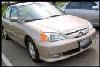
I accelerate like a snail and average 62.9 MPG in my 2006 Honda Civic Hybrid which has an EPA of 50 MPG.
Getting 2 tons of metal from 0 to any speed more quickly has to take more energy than a more gradual change of speed.
I accelerate like a snail and average 62.9 MPG in my 2006 Honda Civic Hybrid which has an EPA of 50 MPG.




